
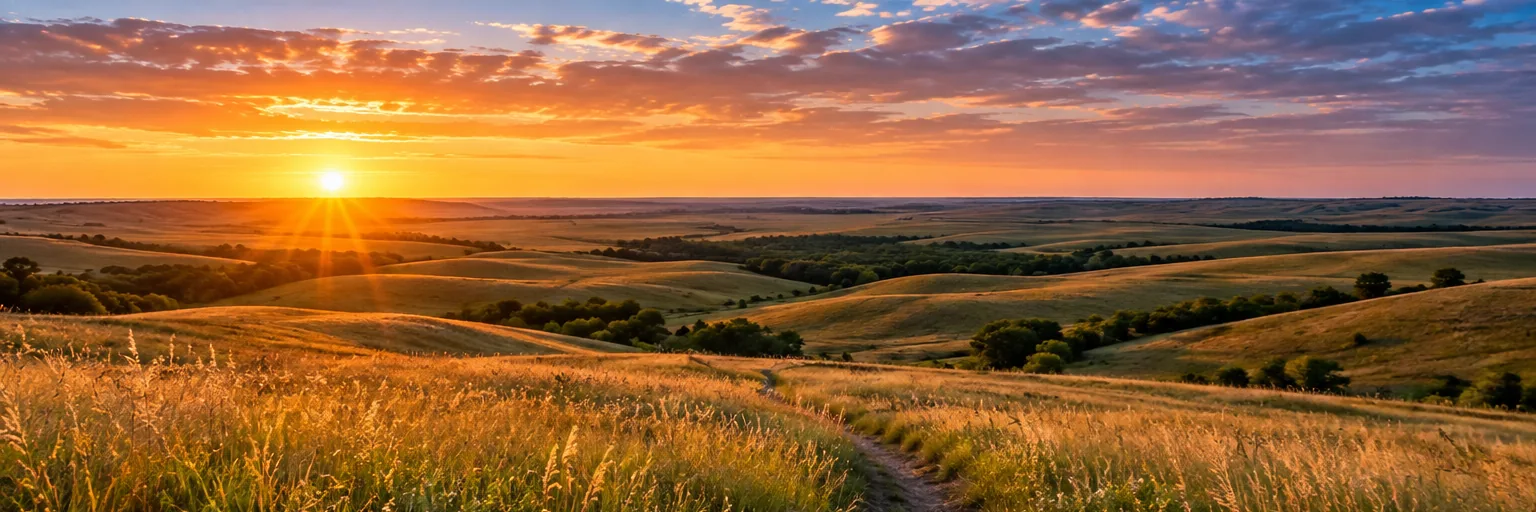
Illustrative landscape artwork, not a documentary photograph. For current conditions, confirm information with official local sources.
There is no single perfect month for the Flint Hills. Spring brings renewal, summer brings a broad green horizon, autumn adds mature golden grasses, and winter reveals the land’s shape. The best choice depends on what you hope to notice.
Spring: fresh green and changing weather
Spring can be dramatic, with new grass growth, wildflowers and prescribed burning in some areas. Strong winds, smoke and thunderstorms can affect plans. Check air-quality and park alerts.
Summer: long days and big skies
Summer offers rich green scenery and extended daylight, but exposed trails can feel hot. Hike early, bring extra water and plan around thunderstorms.
Autumn: tall grass and softer light
Late summer into fall can be especially photogenic. The NPS uses the phrase “Tall in the Fall” to describe how grasses reach mature height near the end of the growing season.
Winter: quiet landscapes
Winter can be peaceful, but cold wind, ice and shorter visitor-center schedules make preparation important. Check official access details before leaving.
Frequently asked questions
Is spring a good time to go?
Yes, if you are comfortable with changeable weather and keep flexible plans.
When is prairie grass tallest?
Tallgrass generally reaches greater height toward late summer and fall, depending on rainfall.
This independent article was editorially prepared on October 14, 2026. Hours, access rules and event schedules can change.