
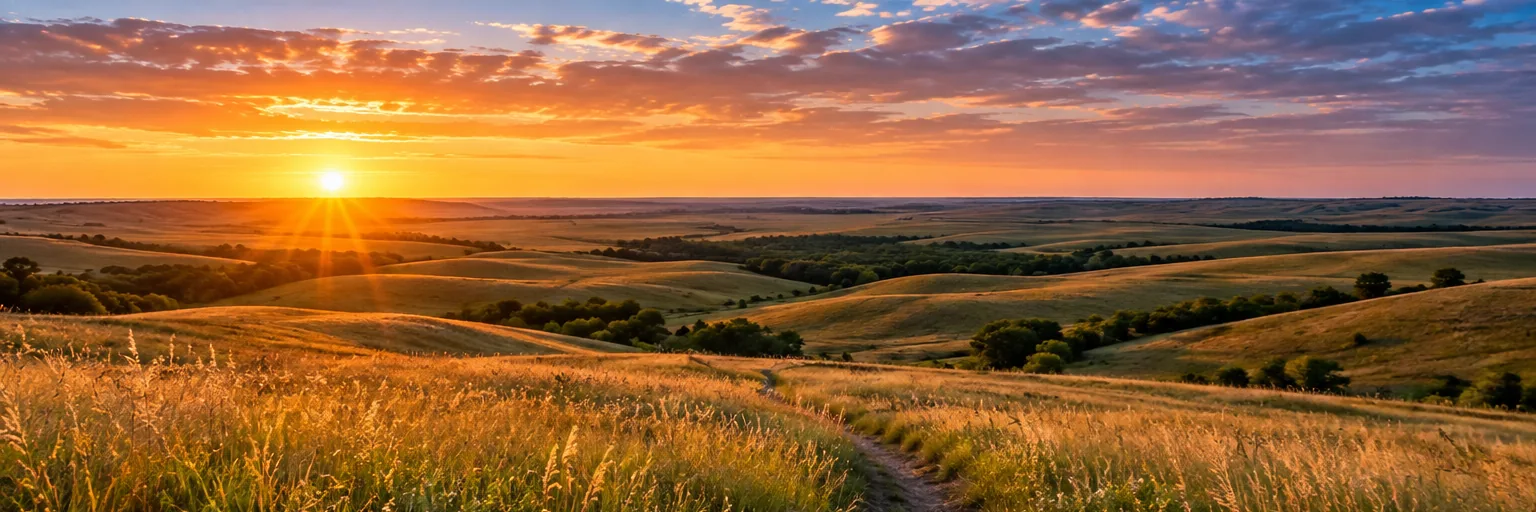
Illustrative landscape artwork, not a documentary photograph. For current conditions, confirm information with official local sources.
The Flint Hills reward a different kind of road trip. Instead of chasing a long checklist, you follow the folds of the land, watch the light shift through the grass and discover how much space a landscape can hold. This guide helps you build a visit around the places that make the region feel distinct.
Start with the landscape
The Flint Hills of eastern Kansas preserve broad stretches of tallgrass prairie. Shallow rocky soils helped keep large areas from being plowed, and today ranching, conservation and tourism all share this landscape.
Choose a simple route
A practical introduction combines the Flint Hills National Scenic Byway on K-177, Cottonwood Falls and Strong City with Tallgrass Prairie National Preserve. Plan your stops before you drive; services can be limited between towns.
What to pack
Bring water, weather-ready layers, sun protection, comfortable walking shoes and an offline map. Winds and temperatures can change quickly, and exposed trails offer little shade.
Slow travel works best
Leave time for a short trail, an unplanned town stop and an evening view. Avoid crossing private fences and use marked public access points. Respect working ranches and never assume an empty-looking field is public land.
Frequently asked questions
Where are the Flint Hills?
The Flint Hills run through eastern Kansas into northern Oklahoma; the Chase County area is a popular introduction.
Can I drive through the Flint Hills?
Yes. Public roads including K-177 provide scenic views, while trail access requires using designated public sites.
This independent article was editorially prepared on October 14, 2026. Hours, access rules and event schedules can change.