
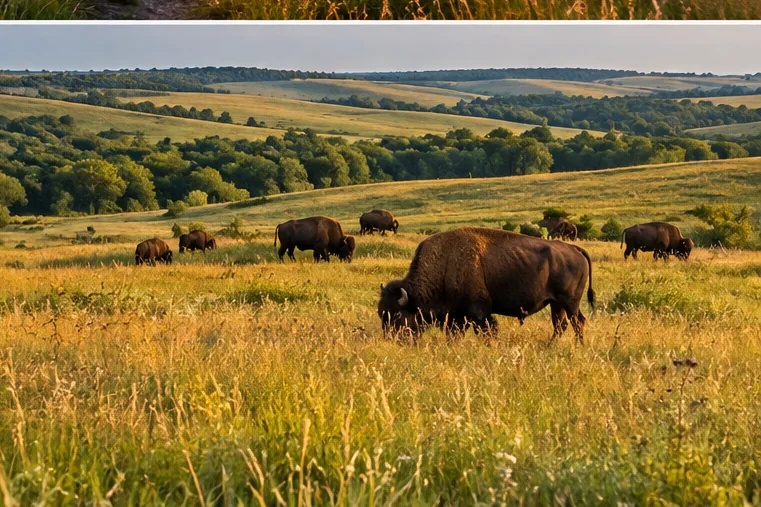
Illustrative landscape artwork, not a documentary photograph. For current conditions, confirm information with official local sources.
A Flint Hills hike is a lesson in small details. The distant view pulls you forward, but the real pleasure may be a grass seed head catching the light or the quiet sound of insects beside a trail.
Choose the right level
For a shorter outing, use signed nature trails at Tallgrass Prairie National Preserve. More experienced hikers can explore the park’s longer backcountry network after reviewing current maps and conditions.
Bring more water than you expect
Prairie trails are exposed to sun, wind and sudden weather. Carry water, sturdy footwear, a charged phone and a downloaded map. Turn around early if storms develop.
Know the wildlife rules
Give bison and other animals plenty of room. Never feed wildlife. Trail closures can occur due to bison, cattle management and prescribed fire.
Leave the prairie as you found it
Remain on permitted routes, take your litter out, do not collect plants and respect adjoining private land. Check the NPS pet rules; pets are not permitted on all routes.
Frequently asked questions
Are there beginner hikes in the Flint Hills?
Yes. The preserve provides short nature trails near visitor services.
Can I camp at the preserve?
No. NPS rules prohibit camping and overnight parking at the preserve.
This independent article was editorially prepared on October 14, 2026. Hours, access rules and event schedules can change.