
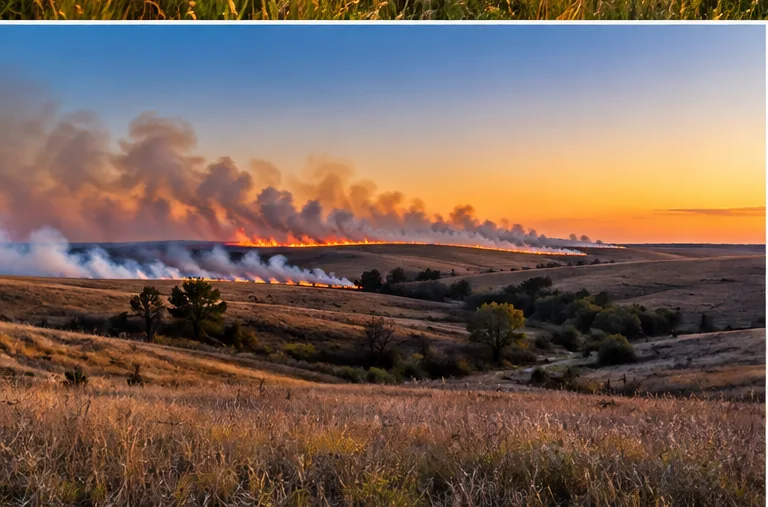
Illustrative landscape artwork, not a documentary photograph. For current conditions, confirm information with official local sources.
On some spring days in Kansas, smoke rises from the hills and makes the landscape look almost otherworldly. Much of this is connected to prescribed burning: a planned land-management practice with deep regional importance. Understanding the difference between a controlled burn and an uncontrolled wildfire changes how you see the prairie.
Why fire belongs in prairie ecology
Tallgrass grasslands evolved with recurring disturbance, including fire and grazing. Under suitable conditions, prescribed fire can help discourage encroaching woody vegetation, recycle nutrients and support a grass-dominated ecosystem.
A prescribed burn is not casual fire
Burn teams consider weather, fuel, permits, containment lines and public safety. Burns may be delayed or cancelled. Never imitate this practice; if you see an uncontrolled fire or immediate danger, contact local emergency services.
What does a burned prairie look like afterward?
Shortly after a burn, the hills can appear dark and bare. With warmth and moisture, green shoots return and the visual change can be dramatic. Timing varies widely with weather and local conditions.
How to observe responsibly
Do not chase smoke, stop on unsafe shoulders or enter a working burn area. For a calmer experience, learn about the process through official park interpretation and visit accessible prairie trails on a clear day.
Frequently asked questions
Are all prairie fires controlled burns?
No. Some fires are wildfires. Never assume a visible fire is planned or safe.
When does burning usually happen?
Prescribed burning is common in spring, but exact timing depends on weather, local rules and management needs.
This independent article was editorially prepared on October 14, 2026. Hours, access rules and event schedules can change.