
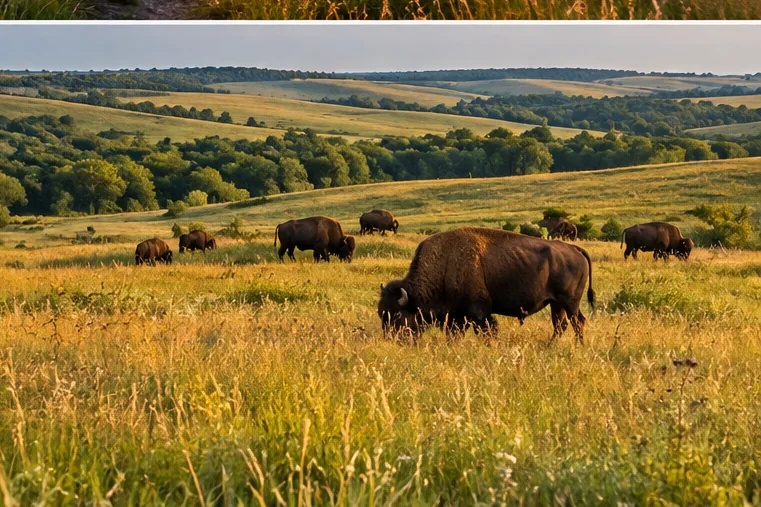
Illustrative landscape artwork, not a documentary photograph. For current conditions, confirm information with official local sources.
At first glance, a prairie can seem empty. Stay longer and the opposite becomes clear. Birds move through the grasses, insects hum around flowers and large grazers reshape the landscape in ways you can see from a distance.
Bison and the grassland story
Bison are one of the prairie’s most recognizable animals. At Tallgrass Prairie National Preserve, they also serve as a reminder that grasslands are active ecosystems shaped by grazing as well as fire.
Listen for birds
Grassland birds can be easier to hear than to see. Bring binoculars, walk quietly and keep to marked trails to avoid disturbing nesting habitat.
Notice the smaller lives
Butterflies, bees and other insects are essential parts of prairie food webs. Look for activity around flowering plants, especially when temperatures are mild and the wind is lighter.
Wildlife watching without harm
Never approach or feed wild animals. Use a zoom lens instead of getting closer, follow seasonal notices and avoid trampling native plants for a photograph.
Frequently asked questions
Can I see bison in the Flint Hills?
Bison may be visible at the preserve, but sightings are never guaranteed.
What should I bring for wildlife viewing?
Binoculars, water, sun protection and patience are all helpful.
This independent article was editorially prepared on October 14, 2026. Hours, access rules and event schedules can change.